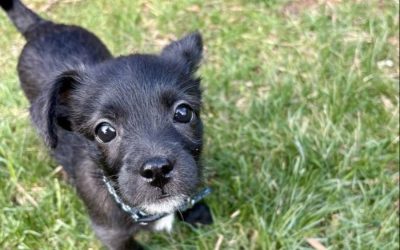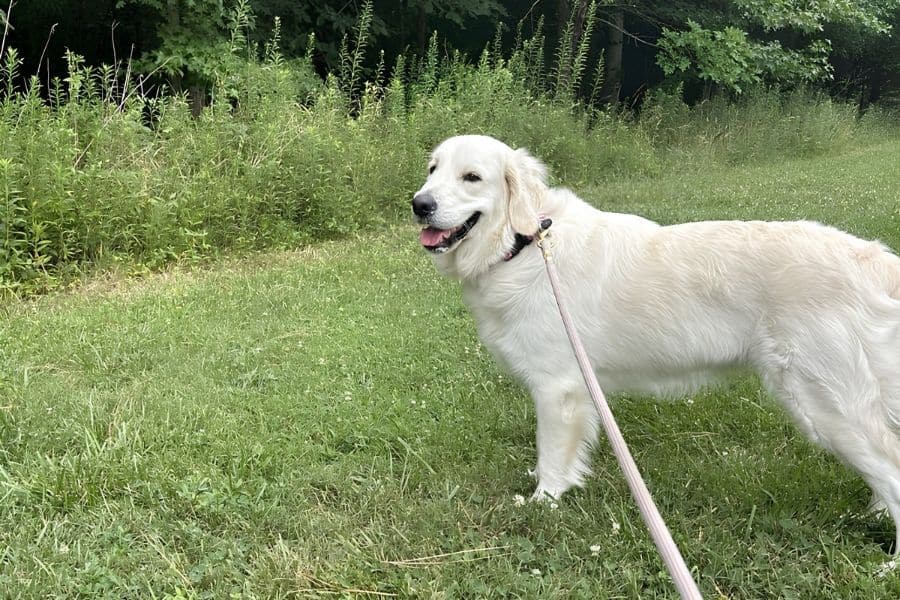
The fastest way to tire out a dog is to combine physical exercise with mental work, not to simply walk further. A dog can run hard for two hours and still pace the house at nine at night, because their body is tired while their brain never got used. Sniffing, problem-solving, and training sessions wear a dog out in a way distance alone doesn’t.
Here is what works, what doesn’t, and how to tell when your dog has had enough.
Why a Longer Walk Often Is Not the Answer
Most people respond to a restless dog by adding distance. Sometimes that helps. Often it backfires.
Building a dog’s physical fitness means they need more exercise to get tired. Walk an athletic dog for 90 minutes every day, and you end up with a dog who needs 90 minutes every day, and who is restless on the days you cannot manage it.
Mental work does not have that problem. A dog that spends 20 minutes solving a puzzle or working through a training session comes home genuinely tired, and you don’t have to increase the dose every month to get the same result.
The practical version is to keep the physical exercise steady and add mental work on top, rather than extending the walk indefinitely.
Mental Ways to Tire Out a Dog
Let them sniff
This is the single most effective and least appreciated option. Dogs read the world through their noses, and sustained sniffing is genuinely demanding work. A slow, dog-led walk where your dog chooses the route and stops as long as they want will leave most dogs more settled than a brisk march of the same length.
We cover how to do this properly in our guide to the sniffari, including why a long line matters.
The nesting bowl game
Raid the cupboard for containers that stack inside one another, either the same size or decreasing from large to small. Put a treat in the bottom container, stack the next one on top, and keep layering treats between them. Leave one treat visible in the top container to get your dog started.
Add containers to make it harder. Supervise throughout, since some dogs will happily chew the plastic instead of solving the puzzle. Mac certainly would.
Scatter feeding
Instead of putting dinner in a bowl, scatter it across the lawn or put it in a snuffle mat. A meal that takes 90 seconds from a bowl can take 15 minutes this way, and your dog has to work for every piece.
Food puzzles and stuffed toys
Puzzle feeders and stuffable toys turn eating into a task. Freezing a stuffed toy makes it last much longer, which helps if you need your dog occupied for a while.
Short training sessions
Learning is tiring. Ten or fifteen minutes of focused training does more for a restless dog than another lap around the neighborhood, and it doesn’t have to be complicated.
Teaching eye contact is a good place to start. Hold a treat near your eye and ask your dog to look at you, then gradually fade the treat until they respond to your hand signal and voice. Beyond the focus it builds, mutual gaze between dogs and their people is associated with oxytocin release in both, which is why it tends to feel good for everyone involved.
Find It games
Hide treats around a room and send your dog to search. Start easy so they understand the game, then make it harder by hiding things out of sight. This is scent work in miniature, and it tires dogs quickly.
Physical Ways to Tire Out a Dog
Change the terrain
A flat sidewalk loop asks very little of a dog’s body. Hills, uneven ground, and trail surfaces require balance and engage more muscles so that a shorter outing can do more. Our guide to the best places to walk your dog in Greensboro covers the local trails and greenways worth trying.
Add structure to fetch
Straight repetitive fetch builds fitness without teaching much. Ask for a sit before each throw, vary the direction, and make your dog wait before you release them. The same number of throws becomes much more tiring when it involves thinking.
Swimming
Swimming is low impact and demanding at the same time, which makes it particularly useful for dogs with joint issues or for hot Greensboro summers when pavement is too warm for a long walk.
Play with another dog
For dogs who enjoy it, a good play session with a familiar dog is hard to beat. This suits social dogs, and not every dog qualifies. If you are considering off-leash play, our guide to the best dog parks in Greensboro covers which parks suit which kinds of dogs.
What Does Not Work
Laser pointers. Dogs chase something they can never catch, which leaves them frustrated rather than satisfied. In some dogs, this develops into compulsive behavior around lights and shadows.
The dog park as a default. It works for genuinely social dogs. For nervous, reactive, or overstimulated dogs, it often leaves them wired rather than tired.
Endless repetition. Thirty minutes of identical throws in the same patch of yard is less useful than ten minutes of something your dog has to think about.
Over-exercising a puppy. Puppies have developing joints and growth plates that do not close until around 12 months, or 18 to 24 months in large breeds. A puppy who seems tireless still should not be walked like an adult dog. We cover appropriate amounts in our guide to when puppies can go on walks.
How to Tell When Your Dog Has Had Enough
A properly tired dog settles on their own, sleeps deeply, and doesn’t shadow you around the house looking for something to happen.
Signs your dog is not getting enough include restless pacing, chewing or destroying things, barking more than usual, digging, difficulty settling in the evening, and following you from room to room.
Signs of too much are worth knowing too: crashing hard and staying flat, limping, stiffness the next morning, or reluctance to go out at all. Build up gradually rather than jumping from short walks to long hikes.
Frequently Asked Questions
How do you tire out a high energy dog?
Combine physical exercise with mental work rather than extending the walk. Scent work, puzzle feeders, training sessions, and varied terrain tire a high-energy dog faster than distance alone, and they don’t build the fitness that makes your dog need more over time.
Does mental stimulation really tire a dog out?
Yes. Problem-solving and sustained sniffing genuinely demand a lot from dogs, and many owners find their dog settles more completely after mental work than after a long walk.
How long does it take to tire out a dog?
It varies by dog, age, and breed. Twenty to thirty minutes of combined physical and mental activity settles many dogs, while high-energy and working breeds often need more. Watch how your dog behaves afterward rather than going by the clock.
Why is my dog still hyper after a walk?
Usually because the walk met their physical needs but not their mental ones, a brisk walk where your dog is kept moving does not give them a chance to sniff or think. Slowing down and letting them investigate often changes the outcome.
Can you over exercise a dog?
Yes. Signs include crashing hard, limping, stiffness, or reluctance to go out. Puppies, senior dogs, and overweight dogs are most at risk.
When There Are Not Enough Hours
Properly tiring out a dog takes time, and most people don’t have that on a weekday.
Top Tails provides dog walking in Greensboro with GPS tracking and a photo update after every walk. For dogs who need more than a neighborhood loop, our Adventure Walks are 90-minute outings where we pick up your dog, take them to explore local parks and trails, and bring them home properly tired.
What works best for your dog? Let us know in the comments.

Andrea is the founder of Top Tails of Greensboro LLC, a professional pet sitting and dog walking company in Greensboro, NC. She is certified in Pet CPR and First Aid and is a member of Pet Sitters International. Learn more about Andrea!