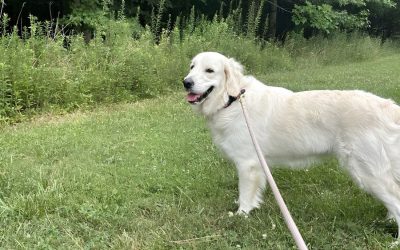
Most puppies can start walking in public places about two weeks after finishing their core vaccination series, usually between 16 and 22 weeks of age. Before then, your puppy can still go outside safely in your enclosed yard or be carried in your arms, a carrier, or a stroller. They should avoid walking on sidewalks, visiting parks, and meeting dogs whose vaccination status you don’t know.
The exact timing depends on your puppy’s vaccine schedule and which vaccines your vet uses, so always confirm with them before that first walk.
The Vaccination Timeline
Puppies receive core vaccines in a series, not all at once. Boosters are typically given every three to four weeks until the puppy is somewhere around 16 to 20 weeks old.
The key is that your puppy isn’t protected the day they get their final shot. Their immune system needs time to build a response, so vets generally advise waiting 10 days to two weeks after the final dose before heading out in public. Depending on the schedule, most puppies reach that point between 16 and 22 weeks.
One shot is not enough. A puppy that has only had its first vaccination should not be walked in public, and a puppy that has had two is usually still partway through the series.
The diseases this protects against are serious. Parvovirus, distemper, canine influenza, and kennel cough all spread in environments dogs have been in, and parvovirus in particular can survive in soil for long periods. That is why sidewalks, parks, and pet store floors are the places to avoid rather than the outdoors in general.
What Your Puppy Can Do Before Then
This is where new puppy owners get stuck. They want what is best for their puppy, but the socialization window, when puppies are most receptive to new experiences, opens well before they are fully vaccinated. Keeping a puppy shut inside until 18 weeks causes its own problems later.
The answer is to separate exposure from ground contact.
Your own yard is usually fine. If you have an enclosed garden that unvaccinated or unknown dogs don’t use, your puppy can be out there after its first vaccination. They can potty train, play, and get used to outdoor sounds and smells there.
Carry them. A puppy in your arms, a carrier, a sling, or a stroller can go almost anywhere. Traffic noise, busy streets, other people, shopping areas. They see and hear it all without their paws touching contaminated ground.
Use the car. Short drives let your puppy get used to the motion and give them a window on the world from somewhere safe.
Invite vaccinated dogs over. A friend’s fully vaccinated, healthy, friendly adult dog visiting your home is one of the best things you can do for a puppy at this stage.
Visit friends’ homes. Clean indoor spaces where you know the dog situation are good territory for new people, new floors, and new household sounds.
Avoid public sidewalks and grass, dog parks, pet stores, and any dog whose vaccination history you don’t know until your vet clears you.
How Much Exercise Does a Puppy Need?
Once your puppy is cleared for walks, the next question is how far to walk. The answer is less than most people expect.
The widely used guideline is the five-minute rule: roughly five minutes of walking per month of age, up to twice a day. So a four-month-old puppy needs about 20 minutes per outing, and a six-month-old about 30.
This is not about stamina. Puppies have soft, developing joints, and their growth plates do not close until around 12 months, or 18 to 24 months in large and giant breeds. Over-exercising a puppy during that window can cause lasting joint and limb problems. A puppy who seems tireless is not a puppy who should be walked for an hour.
Bathroom trips are separate from this and do not count toward the total. Young puppies need to go out frequently, often four to eight times a day, especially after eating, napping, and playing.
Once your dog reaches adulthood, their needs change considerably, which we cover in our guide to how often you should walk your dog.
Making the First Walk Go Well
Practice the gear indoors first. Let your puppy wear the collar and harness around the house for a few days before attaching a leash. A puppy meeting it all for the first time on a sidewalk has a lot to process at once.
Keep the first one very short. Five or ten minutes is plenty. The goal is a good experience, not distance.
Pick somewhere quiet. A residential street at an off-peak hour beats a busy park. Repeat the same quiet route for the first several walks so it becomes familiar.
Let them set the pace. Puppies stop constantly to investigate things. That is the walk doing its job. Dragging them along teaches them that the leash means pressure.
Bring treats. Rewarding your puppy for walking beside you, for recovering from a startle, and for ignoring a distraction builds habits that are much harder to install later.
Watch for overwhelm. Freezing, tucking the tail, trying to turn back, or refusing to move all mean it is time to go home. Push through, and the next walk will be harder.
Keep it clean. For the first few weeks after clearance, stick to areas with less dog traffic while your puppy’s immunity settles.
When Can Puppies Meet Other Dogs?
Not until roughly two weeks after their final vaccination, same as walks. Before that, contact should be limited to dogs you know are fully vaccinated and healthy.
Dog parks are a separate question and come later still. An off-leash park full of unknown dogs is a lot for a young puppy, both medically and socially, and a bad early experience can shape how they handle other dogs for years. Once your puppy is older and more confident, our guide to the best dog parks in Greensboro covers which ones have separate areas and quieter settings.
Frequently Asked Questions
When can a puppy go on their first walk?
Usually about two weeks after completing their core vaccination series, which typically falls between 16 and 22 weeks of age. Timing varies with the vaccine schedule, so confirm with your vet before the first outing.
Can I walk my puppy after their second vaccination?
Generally no. Most puppies are not fully protected after two doses, since the series continues with boosters every three to four weeks until roughly 16 to 20 weeks. Walking before the series is complete carries a real risk of parvovirus and other diseases.
Can a 12-week-old puppy go for a walk?
Most 12-week-old puppies have not finished their core vaccines, so public walks are usually not recommended yet. At that age, your own enclosed yard and carrying your puppy out to see the world are the safer options.
How long should a puppy walk be?
About five minutes per month of age, up to twice daily. A three-month-old puppy needs roughly 15 minutes per walk. Longer walks risk damaging developing joints and growth plates.
How do I socialize a puppy before they are vaccinated?
Carry them in your arms, a carrier, or a stroller so they experience sights and sounds without touching public ground. Invite fully vaccinated, healthy dogs to your home, visit clean indoor spaces, and use your own enclosed yard.
Can my puppy go in the backyard before vaccinations?
Usually yes, if the yard is enclosed and not used by dogs whose vaccination status you do not know. Check with your vet, since local disease risk varies.
Once Your Puppy Is Ready for a Routine
Puppies need frequent, short outings, which can be hard to manage around a full workday. If your schedule does not allow for midday trips during these months, we can help.
Top Tails provides dog walking in Greensboro with visits sized appropriately for your dog’s age, GPS tracking, and a photo update after every walk. For puppies left alone during the day, a midday walk covers the bathroom break and the short burst of movement they need without overdoing it.
We start every new client with a free meet-and-greet to introduce your puppy to a walker while they are still young and forming impressions.

Andrea is the founder of Top Tails of Greensboro LLC, a professional pet sitting and dog walking company in Greensboro, NC. She is certified in Pet CPR and First Aid and is a member of Pet Sitters International. Learn more about Andrea!